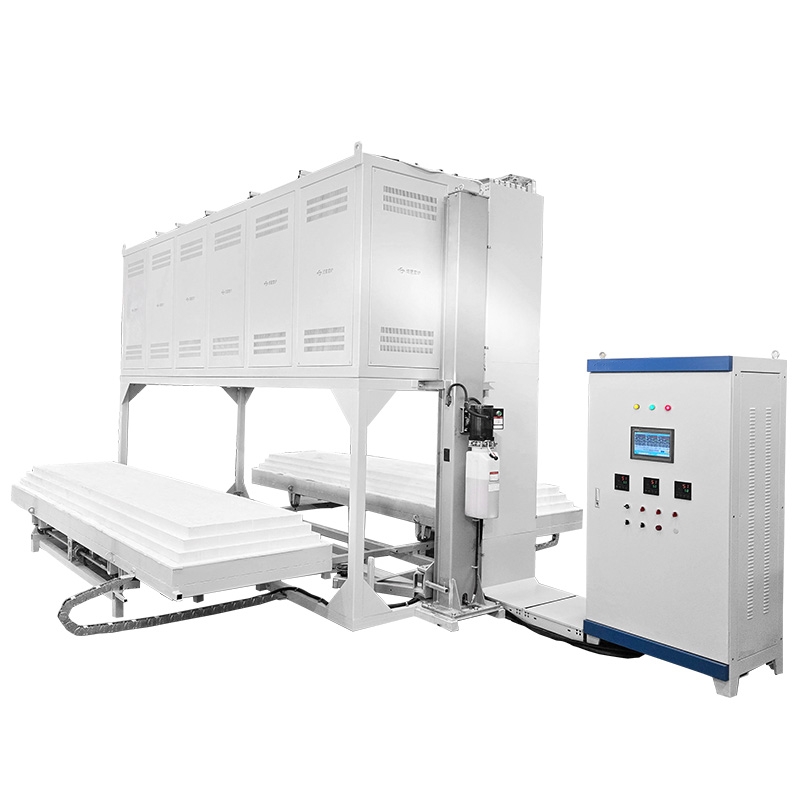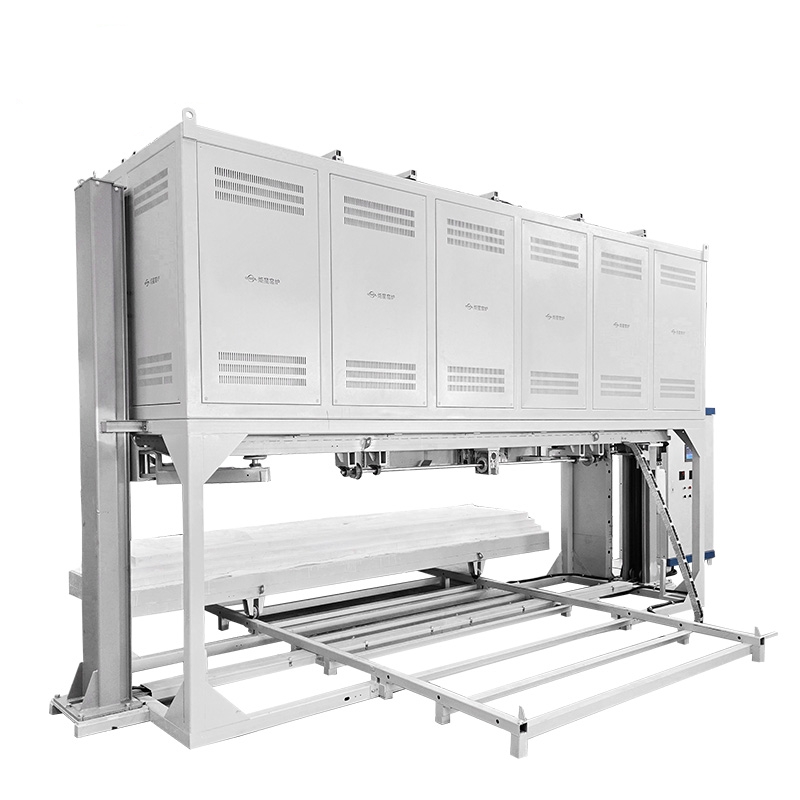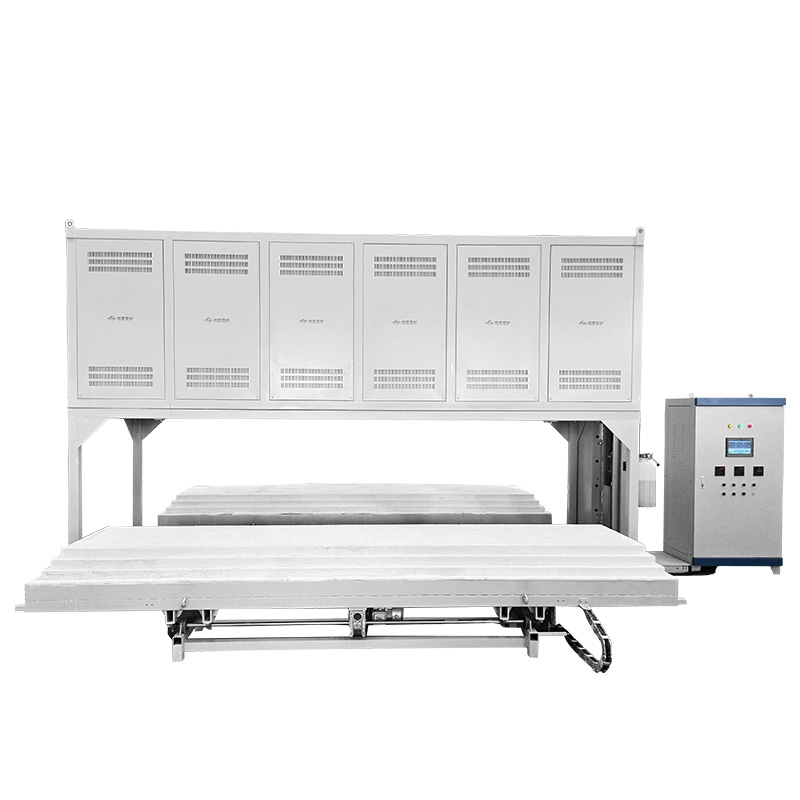

1600°C Dual-Loading-Table Elevator Lifting Furnace
Parameter | Specification |
Maximum Temperature | 1600°C |
Continuous Operating Temperature | ≤1550°C |
Control Range | 80 to 1700°C |
Furnace Chamber Dimensions | 4000 × 800 × 800 (mm) |
Number of Loading Tables | Two |
Temperature Sensor | Type B thermocouple, measuring range 200–1700°C |
Temperature Control Points | Three control points (left, center, right) |
Power | 350 kW |
Heating Element Installation Position | Surrounding (four sides) |
Temperature Control Accuracy | ±1°C (integrated circuit control, no overshoot) |
Furnace Temperature Uniformity | ±15°C (depending on chamber size) |
Heating Rate | Adjustable. Below 1400°C: max. 10°C/min; above 1400°C: max. 5°C/min; minimum: 1°C/h |
Heating Elements | 1700 type molybdenum disilicide (MoSi₂) rods installed around the chamber |
Exhaust Ports | Three exhaust ports of Ø60 mm evenly distributed on the top of the furnace. Exhaust pipes: corundum tubes |
Loading Table | Electric driven in/out, hydraulic lifting |
Insulation Material | Side walls (four layers): Layer 1: 1700 type lightweight energy saving micro porous foam ceramic high temperature insulation material, thickness 120 mm Layer 2: 1500 type alumina fiber board (Juxing), thickness 50 mm Layer 3: 1400 type alumina fiber board, thickness 50 mm Layer 4: 1400 type alumina fiber board, thickness 50 mm Layer 5: Zirconium containing insulation cotton, thickness 100 mm Furnace top (three arches): Layer 1 (arch): 1700 type lightweight energy saving micro porous foam ceramic high temperature insulation material, thickness 120 mm Layer 2 (arch): 1600 type alumina fiber board, thickness 50 mm Layer 3 (arch): Ceramic fiber blanket, thickness 100 mm
|
Refractory Materials at Furnace Mouth | Four crossed steps: Step 1: 1700 type alumina hollow sphere bricks Step 2: 1700 type alumina hollow sphere bricks Step 3: 1500 type M28 bricks Step 4: 1500 type M28 bricks |
Refractory Materials on Loading Table | Four crossed steps: Step 1: 1700 type alumina hollow sphere bricks Step 2: 1700 type alumina hollow sphere bricks Step 3: 1500 type M28 bricks Step 4: 1500 type M28 bricks |
Furnace Outer Shell Temperature | Under continuous long term operation, the outer shell temperature is less than room temperature +35°C. |
Protections
| Integrated modular control unit with high control accuracy. Dual loop control and dual loop protection, including protections against overshoot, over regulation, under regulation, broken thermocouple, phase loss, overvoltage, overcurrent, overtemperature, current feedback, soft start, etc. |
Control Method | Closed loop SCR (thyristor) module triggering – phase shift or zero crossing control. Output voltage, current or power continuously adjustable, with constant voltage, constant current or constant power characteristics. Inner current loop and outer voltage loop – limits output current within rated range under sudden load or overcurrent conditions, ensuring stable operation and protecting heating elements from excessive current/voltage surges, achieving safe and reliable control and high accuracy. |
Touch Screen | 7 inch touch screen for integrated control, displaying real time voltage, current, and power. Chinese menu, temperature, segment number, segment time, remaining time, output power percentage, multiple heating process curve storage, historical curves and data reports, etc. Standard Accessories Two heating elements, two sets of electrode rods, one pair of crucible tongs, one pair of high temperature gloves. |
Warranty | One year free warranty for the furnace. Heating elements are not covered. |
Precautions | To avoid affecting the furnace service life, we recommend a maximum heating rate of less than 15°C/min (excessively fast heating at high temperatures will shorten the life of heating elements). This elevator furnace does not have a vacuum sealing structure – DO NOT introduce flammable or explosive gases. After using this elevator furnace for some time, small cracks may appear in the furnace chamber. This is normal and does not affect operation. They can be repaired with alumina coating. Corrosive gases are not recommended. If highly corrosive gases such as S or Na compounds must be introduced, please inform us in advance so that the furnace chamber can be specially treated. Do not allow high temperature melt to leak onto the furnace bottom. Use a base plate or alumina powder isolation as a precaution. The instrument should be placed in a well ventilated, dry area. |